
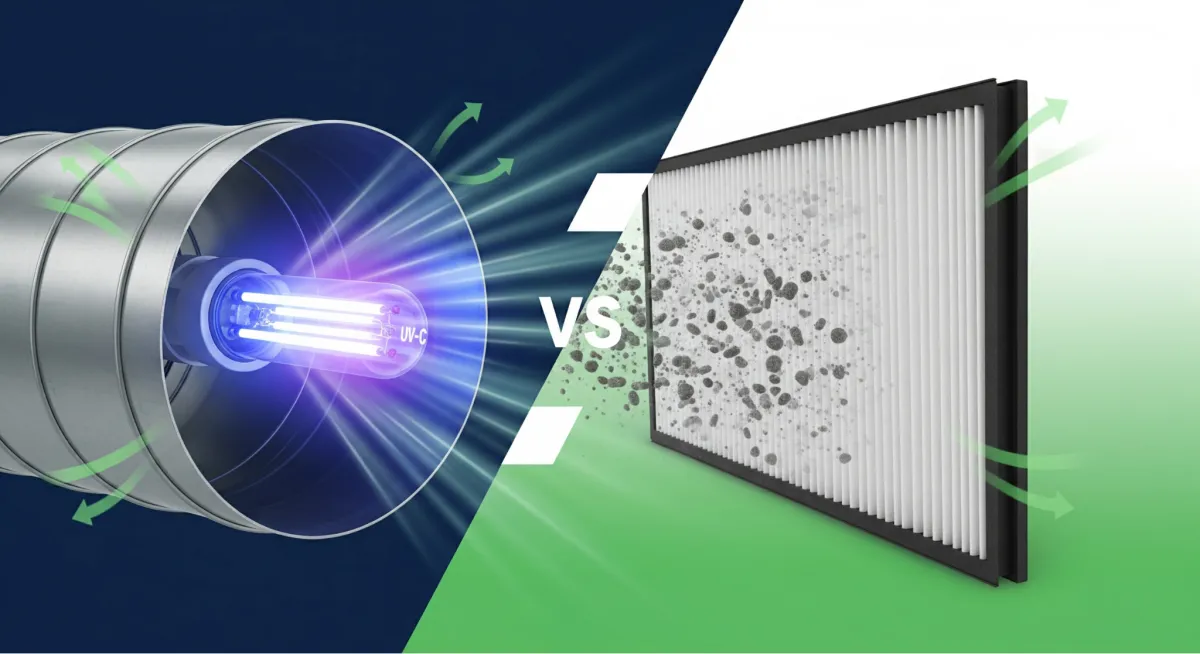
What’s the Difference Between UV HVAC Systems and HEPA Filters?
Understanding HEPA Filters
HEPA stands for High-Efficiency Particulate Air. These filters are designed to trap at least 99.97% of airborne particles as small as 0.3 microns — including:
Dust
Pollen
Mold spores
Pet dander
Some bacteria
They're passive filters, meaning air must flow through them for particles to be captured. HEPA filters are commonly found in:
Standalone air purifiers
HVAC systems with upgraded filtration slots
Hospital-grade filtration systems
However, HEPA filters do not kill microbes — they only trap them. Over time, a dirty HEPA filter can even become a source of contamination.
What Are UV HVAC Systems?
UV HVAC systems use ultraviolet light (UV-C) to destroy bacteria, mold, and viruses by damaging their DNA or RNA, rendering them harmless.
Installed within your HVAC system, UV lights:
Sterilize coils to prevent mold buildup
Disinfect air as it circulates
Neutralize biological growth in the ductwork
Unlike filters, UV systems are active sanitizers — they neutralize microbes rather than trap them.
Core Differences Between UV & HEPA

Bottom line: HEPA filters capture, while UV systems kill.
How They Work Together in a Hybrid System
The best indoor air quality strategy is to combine both systems:
HEPA filters remove particles like dust and allergens
UV-C lights kill airborne and surface-bound microbes
EnviroGreen often recommends this combo for homes with:
Children or elderly residents
Allergy sufferers
Pets
High humidity or mold-prone conditions
This layered approach creates medical-grade indoor air in residential spaces.
Which System Is Better for You?
That depends on your home, health, and goals:
You Should Prioritize...
If You Want To...
HEPA Filters
Reduce dust, pollen, and airborne allergens
UV HVAC System
Kill mold, bacteria, viruses, and control odor
Both
Achieve maximum protection for respiratory or allergy concerns
In older homes across Brooklyn, Newark, and Hartford, hybrid systems are especially helpful due to dated ductwork and insulation.
Real Results from Tri-State Homes
Bridgeport, CT: A family with severe asthma installed both systems and reported 80% fewer breathing flare-ups.
Hackensack, NJ: UV-C reduced persistent HVAC mold and smells in a renovated condo.
White Plains, NY: HEPA filters alone couldn’t handle allergy season — a UV system made the difference.
Safety and Maintenance Differences
HEPA Filters
Must be changed every 3–6 months
Become less effective when dirty
No electricity or special handling
UV HVAC
Bulbs replaced every 9–12 months
Requires professional install and replacement
Must avoid direct UV exposure
With EnviroGreen, we track and handle all this for you with annual maintenance reminders and service plans.
Why Choose EnviroGreen to Help You Decide
We serve homeowners in New York, New Jersey, and Connecticut with honest, expert assessments:
Licensed HVAC technicians
Full air quality evaluations
HEPA + UV system installations
Filter tracking and UV bulb service reminders
We tailor recommendations based on your family, your home, and your goals.
FAQs: UV vs. HEPA Systems
Q1: Can I use both together?
Absolutely. It’s actually the best option for comprehensive indoor air protection.
Q2: Are UV systems safe?
Yes — when installed by professionals, there’s no exposure risk.
Q3: Which helps with pet dander?
HEPA filters capture dander. UV systems help reduce pet-related odors and bacteria.
Q4: Is HEPA enough on its own?
Not always. It doesn’t kill microbes or stop mold from forming inside your system.
Q5: Will this reduce my HVAC repair costs?
Yes! Clean coils and ducts mean fewer breakdowns and a longer-lasting system.
Final Verdict: Pick the Best System for Clean Air
Both HEPA filters and UV HVAC systems play vital roles in improving indoor air quality — but they solve different problems.
If you’re serious about breathing cleaner air in New York, New Jersey, or Connecticut, talk to EnviroGreen Duct Cleaning.
📞 Schedule your hybrid system consultation now: www.envirogreenductcleaning.com


